
Is It Safe to Travel to Vietnam? A Practical 2026 Safety Guide
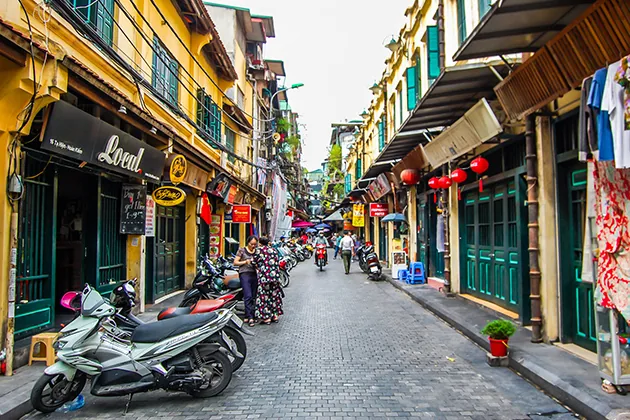
Is it safe to travel to Vietnam in 2026? For the vast majority of visitors, yes, and the official numbers back that up: the US State Department currently rates Vietnam Level 1, its lowest risk category, and Vietnam ranked 41st out of 163 countries in the 2026 Global Peace Index. But “safe” is not the same as “risk-free,” and the honest answer involves naming the specific things that actually cause problems for travelers: traffic, not crime, is the real hazard, alongside a handful of well-documented scams and some basic health precautions. This guide walks through what the advisories say, what actually happens to travelers on the ground, and how a structured, guided tour changes the risk picture compared to independent travel.
- US State Dept: Level 1, exercise normal precautions
- UK FCDO: low risk, no areas advised against
- Australia Smartraveller: Level 1 (green), exercise normal safety precautions
- Global Peace Index 2026: ranked 41st of 163 countries, 8th in Asia-Pacific
- Top real risk: road traffic (fatality rate 17.7 per 100,000), not violent crime
- Most common tourist issue: petty theft and bag-snatching, not assault
Is It Safe to Travel to Vietnam? What the Official Advisories Say
Vietnam is currently placed in the lowest risk tier by three of the world’s most-cited government travel advisories. The US State Department’s Vietnam advisory, last updated in mid-2026, rates the country Level 1, “exercise normal precautions,” its top safety rating, while flagging petty crime in tourist areas and noting that unexploded ordnance from wartime remains a rural, non-urban risk with little relevance to organized tours on established routes.
The UK Foreign, Commonwealth & Development Office (FCDO) does not advise against travel to any part of Vietnam. Its guidance describes violent crime against foreigners as rare, while petty theft, particularly bag-snatching by thieves on motorbikes, is flagged as a regular occurrence in crowded tourist areas, with a seasonal uptick around Christmas and Tet, the Lunar New Year. Australia’s Smartraveller mirrors this with a Level 1, “exercise normal safety precautions” rating, while specifically warning about credit card, taxi, and gambling scams.
For a broader benchmark, the 2026 Global Peace Index, published by the Institute for Economics and Peace, ranked Vietnam 41st out of 163 countries and territories, among the more peaceful nations in the Asia-Pacific region, even though it slipped a few places from the prior year. None of this means zero risk. The baseline risk profile is closer to a typical Southeast Asian destination than a high-alert one, so the more useful question is not a yes-or-no, but which specific risks deserve your attention before and during a trip.
Crime and Scams: What Travelers Actually Encounter
Violent crime against tourists is uncommon in Vietnam, but low-level opportunistic crime is common enough to plan around. Bag-snatching by passengers on passing motorbikes is the most frequently cited issue in both the FCDO and Smartraveller guidance, concentrated in busy pedestrian zones of Hanoi and Ho Chi Minh City. Alongside that, Smartraveller specifically calls out credit and debit card fraud, inflated or rigged taxi meters, and gambling scams targeting visitors, particularly around the small cluster of backpacker districts in Hanoi’s Old Quarter and Ho Chi Minh City’s District 1.
None of these require heroics to avoid, just habits: keep bags on the side away from the road, never hand your passport over as a “deposit” for a motorbike rental or hotel guarantee, and use metered or app-based transport with a confirmed price before you get in. The table below breaks down the main risk categories travelers ask about, alongside the practical precaution and how a structured tour changes the exposure.
| Risk Category | Practical Precaution | How CVT Tours Address It |
|---|---|---|
| Petty theft & bag-snatching | Keep bags on the side away from traffic, avoid displaying phones and cash in crowds | Small-group vehicle transfers from fixed meeting points, no solo waiting on open streets |
| Traffic accidents (the top real risk) | Avoid self-driving a rental motorbike, use licensed professional drivers | Licensed drivers on every tour, no self-drive segments in the itinerary |
| Taxi & metered fare scams | Use app-based transport or confirm a fixed price before boarding | Group transport is already included at a fixed price, no meter negotiation needed |
| Booking & deposit scams | Book with a registered operator that publishes a clear refund policy | Published cancellation policy and publicly listed fixed pickup points |
| Food and water-borne illness | Drink sealed bottled or filtered water, choose busy stalls with high turnover | Guides route stops through vetted, high-turnover locations along the way |
| Natural disaster season disruption | Check typhoon season (roughly June to November, peaking September-October) before booking | Guides monitor conditions and can adjust pickup logistics on tour day |
The pattern in almost every scam report above is the same: a moment where a traveler is alone, rushed, or unsure who to trust. Fixed meeting points and a guide who already knows the route remove that moment, which is the main practical safety value of a structured tour over improvised solo logistics.
Traffic and Road Safety: Vietnam’s Real Highest-Risk Factor
There is one category where Vietnam’s safety profile needs a real caveat: road traffic. Vietnam’s road fatality rate stands at roughly 17.7 per 100,000 people, higher than both the Asia-Pacific average of 15.2 and the Southeast Asia average of 14.4, according to the Asian Transport Observatory’s 2025 road safety profile. Officially reported annual road deaths have stayed below 10,000 since 2018, an improvement from earlier decades, though WHO modeling has historically estimated higher figures, reflecting how the two sources count fatalities differently.
The practical driver of this risk is motorbike density combined with mixed traffic, speeding, and inconsistent seatbelt and helmet use. Renting a motorbike as a first-time visitor and self-driving through Hanoi’s Old Quarter or coastal highways is where most traveler injuries actually originate, more than theft or assault. Neither the US, UK, nor Australian advisories rate Vietnam as high-risk overall, but each one warns that international driving permits carry restrictions, and Smartraveller notes that Australian licenses are not recognized for motorbikes without a valid Vietnamese license.
Choosing licensed, professional drivers over self-driving is the single biggest lever a traveler has over their own safety outcome in Vietnam. On our tours, every transfer uses a licensed driver and a fixed vehicle, never a rental motorbike handed to a guest who has never navigated Hanoi traffic before.
Is Vietnam Safe for Solo Female Travelers?
Vietnam is commonly reported by solo female travelers as one of the more comfortable Southeast Asian destinations to navigate alone, particularly across the 4 main tourist corridors of Hanoi, Ho Chi Minh City, Hoi An, and Ha Long Bay. Neither the FCDO nor Smartraveller flags Vietnam with gender-specific warnings beyond the general advice that applies to any destination: avoid walking alone on poorly lit streets late at night, keep valuables secured, and use hotel-arranged or app-based transport after dark rather than flagging down an unmarked taxi.
Harassment does happen, as in any country, but it is not flagged as a distinguishing risk factor in the major government advisories the way it is for some other destinations. The same precautions that reduce theft risk, staying in well-reviewed accommodation and avoiding isolated areas after dark, cover most of the practical concern. If you are unsure about a driver or a price late at night, ask your hotel front desk to arrange the transport instead of flagging one down on the street. Joining a small-group guided tour removes the need to navigate unfamiliar transport alone, often the actual source of anxiety rather than any specific threat.
Health, Water, and Food Safety Basics
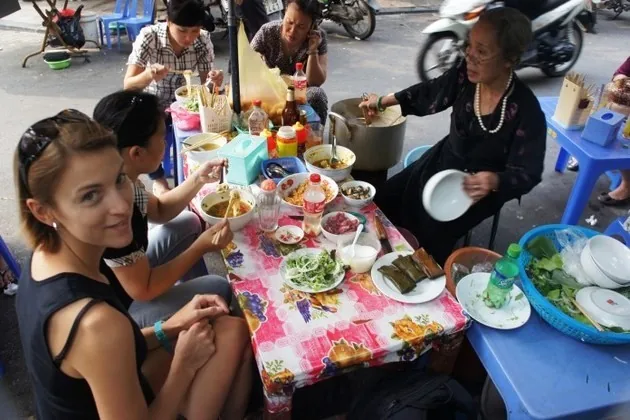
Tap water is not safe to drink anywhere in Vietnam, a point every major health advisory agrees on. Bottled and filtered water is sold cheaply and everywhere, so this is one of the easiest risks to manage. Standard food safety advice applies: eat at stalls with high customer turnover, avoid ice of uncertain origin, and be cautious with unpeeled raw produce in the first 2-3 days as your system adjusts.
Routine travel vaccinations (measles, tetanus, hepatitis A) are commonly recommended before a Vietnam trip, alongside standard mosquito precautions given dengue activity, particularly during and after the rainy season. None of this is unique to Vietnam among tropical destinations. You’ll find reputable hospitals with English-speaking staff, Vinmec and Family Medical Practice among them, in both Hanoi and Ho Chi Minh City. Pack prescription medication in original packaging with a copy of the prescription.
Natural Disasters and Weather: Typhoon Season Timing
Vietnam’s central and northern coastal regions, including Ha Long Bay, sit within a typhoon-affected zone, with the season running across a roughly 6-month window from June through November and peaking in September and October. Storms during this window can disrupt sailings, flights, and road transport with little notice, a logistics risk rather than a safety statistic, but worth planning around if your dates fall in that window. Southern Vietnam, including Ho Chi Minh City and the Mekong Delta, sees a milder wet season with less typhoon exposure.
Neither the US, UK, nor Australian advisories treat typhoon season as a reason to avoid travel to Vietnam altogether. It is a scheduling variable, not a deterrent, and tour operators with local weather monitoring can usually adjust itineraries rather than cancel outright when conditions shift. If you are booking for September or October specifically, ask your operator directly what their weather contingency and rebooking process looks like before you pay a deposit.
How CVT’s Structured Tours Reduce the Risks Travelers Worry About Most
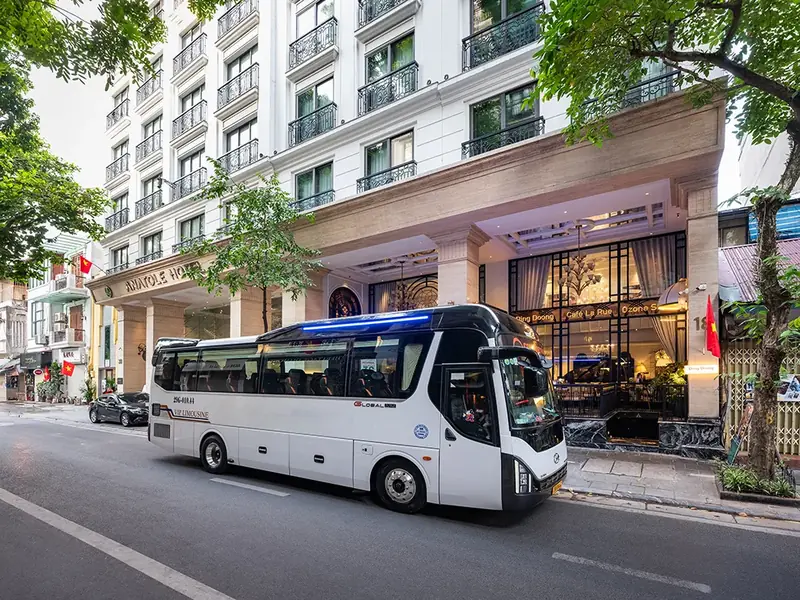
Every risk category above has one thing in common: it is worse when a traveler is improvising logistics alone in an unfamiliar city, and smaller when a known route, a licensed driver, and a professional guide are already built into the plan. That is the practical logic behind booking a guided tour rather than piecing transport and pickups together independently, and it is worth being specific about how that plays out.
Our pickup system uses 7 fixed, publicly listed meeting points across Hanoi’s Old Quarter and Hoan Kiem area, each with a confirmed pickup time, rather than asking guests to find their own way to an unfamiliar dock or bus station. Our guide calls you the evening before to reconfirm your exact pickup point and time, a detail published openly on our meeting points page. That single detail removes two of the risk categories above: negotiating a taxi to an unfamiliar departure point, and the isolated, rushed moments scam reports consistently describe.
Every transfer on our tours uses a licensed, professional driver, never a rental motorbike handed to a first-time visitor, which is the single largest lever against Vietnam’s leading real risk category: road traffic. When you book with us, review our About Us page and our published cancellation policy before paying anything, which addresses the booking-scam risk directly rather than asking for blind trust. None of this eliminates every risk of travel, but it removes the specific failure points that show up most often in the advisories and traveler reports cited throughout this guide.
Frequently Asked Questions
What is Vietnam’s current safety rating?
Yes. As of 2026, the US State Department rates Vietnam Level 1, exercise normal precautions, its lowest risk category, and the UK FCDO and Australia’s Smartraveller give similar low-risk guidance. Vietnam also ranked 41st out of 163 countries in the 2026 Global Peace Index. The main practical risks are traffic and petty theft, not violent crime.
Is Vietnam safe for solo female travelers?
Most solo female travelers report feeling secure in Vietnam’s main tourist cities and on organized tours. Standard urban precautions apply: avoid poorly lit streets late at night, keep bags on the side away from traffic, and use hotel-arranged or app-based transport after dark rather than hailing a random taxi.
What is the biggest safety risk for tourists in Vietnam?
Road traffic, not crime, is statistically the highest risk. Vietnam’s road fatality rate is around 17.7 per 100,000 people, above the Asia-Pacific average of 15.2, driven mainly by motorbike density. Most traveler safety incidents involve traffic, not theft or violence, which is why guided transport matters more than most people expect.
Is the tap water safe to drink in Vietnam?
No, tap water is not recommended for drinking anywhere in Vietnam, including Hanoi and Ho Chi Minh City. Stick to sealed bottled or filtered water, which is sold everywhere for a low cost, avoid ice from unclear sources at street stalls, and choose busy food stalls with high turnover to reduce food-borne illness risk.
Do I need travel insurance for a trip to Vietnam?
Travel insurance is not legally required to enter Vietnam but is strongly recommended given the traffic risk profile and the cost of medical evacuation from rural areas like Ninh Binh or Ha Long Bay. Confirm your policy covers motorbike-adjacent incidents and read the operator’s own cancellation policy alongside it before booking.
Is Hanoi safe to walk around at night?
Central Hanoi, including the Old Quarter, is generally safe to walk at night, with violent crime against foreigners rare according to UK FCDO guidance. The realistic concerns are bag-snatching from passing motorbikes and heavy, chaotic traffic at intersections. Crowdsourced Numbeo safety index data rates Hanoi among the higher end for a city of its size in 2026.
Verdict: Is Vietnam Safe to Visit?
For the overwhelming majority of visitors, yes, and the current advisories from the US, UK, and Australia all back that with their lowest risk ratings. The real work is not deciding whether Vietnam is safe in the abstract, it is managing the two categories that actually cause problems: road traffic and opportunistic petty crime. Skip the self-driven motorbike, keep your bag on the side away from traffic, drink bottled water, and book transport through a structured process rather than improvising on arrival.
A guided tour with fixed meeting points, licensed drivers, and a published cancellation policy is not a guarantee against every incident, but it removes the specific failure points every advisory and traveler report in this guide points back to. If you are planning a Ha Long Bay or Ninh Binh day trip from Hanoi, our meeting points and pickup details are published in full before you book, alongside our fleet on the Cozy Vietnam Travel homepage.
© 2026 cozyvietnamtravel.com. All rights reserved. Original research by the Cozy Vietnam Travel Editorial Team. First published on cozyvietnamtravel.com. Unauthorized reproduction prohibited.